Trending 2026
612k views
Before spending $8,000 on gum graft surgery, watch this free video — a Navy veteran explains why the bacteria causing your gum recession have been protected from every treatment you've tried.
Scientists are calling it "nature's cavity killer" — a strange Nordic enzyme used by Viking-era Scandinavians for centuries that researchers say explains why millions of Americans suffer from receding gums, gum recession, and bone loss no matter how many treatments they try. Watch this short free video to discover what it is, why it works, and why your dentist has never mentioned it.
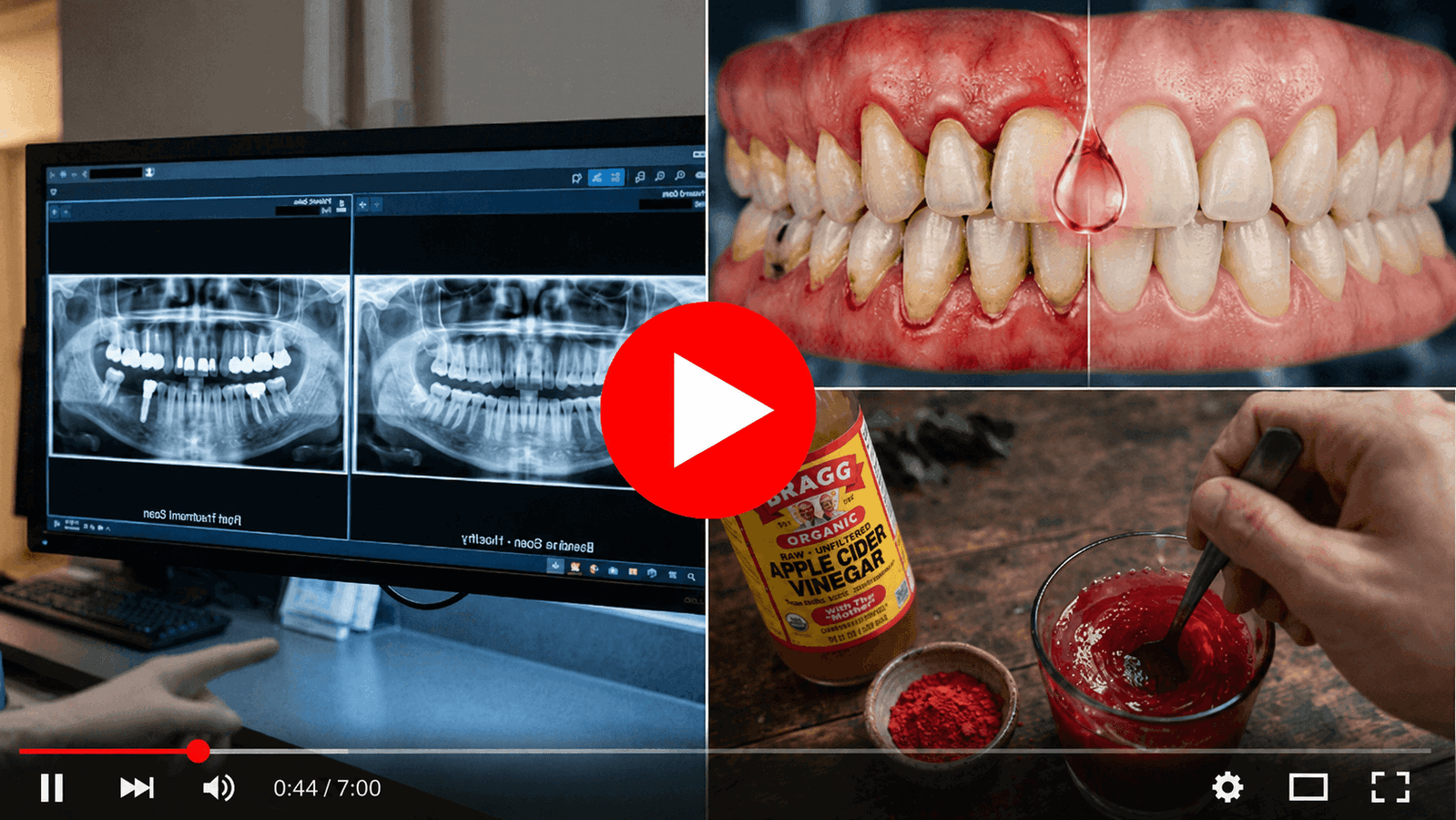
If your gums are pulling away from your teeth, your dentist has mentioned gum graft surgery, or you've watched your gumline recede no matter how many treatments you've tried — there's something you need to see before you spend another dollar on cleanings, antibiotics, or a procedure that costs thousands.
It doesn't matter if the recession started recently or if you've been watching it worsen for years. It doesn't matter if you've already done scaling, root planing, or rounds of antibiotics that worked for two weeks and then stopped. The problem isn't your hygiene. It's something your dentist was never trained to address.
A retired US Navy dental technician who spent 15 years treating severe oral infections in the field just went public with a discovery he says explains why every treatment for gum recession — from prescription rinses to surgical procedures — fails to stop the progression for good.
His name is Jim Hartwell. And his story starts with a phone call at 6:47 AM that he'll never forget.
His closest Navy brother — a man who brushed twice a day, flossed every night, saw his dentist religiously, and still spent over $25,000 trying to save his teeth — called him in tears. The gum pockets kept deepening. The recession kept advancing. The dentist was now talking about graft surgery and possible extractions.
"Jim, I'm desperate. You're my last hope."
What Hartwell discovered trying to help his friend turned everything he thought he knew about gum recession completely upside down.
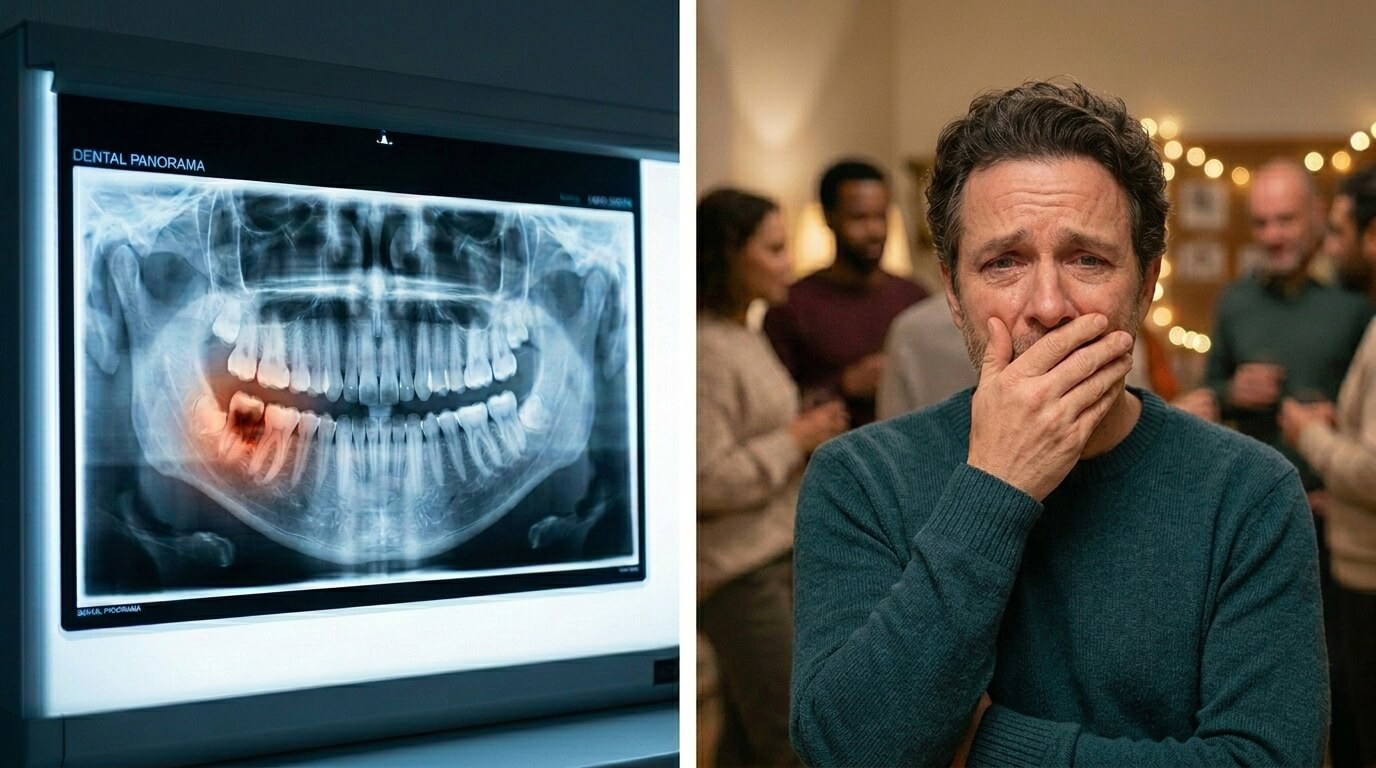
According to Hartwell, receding gums aren't a structural problem. They're not caused by brushing too hard, genetics, or aging. Gum recession, gum pocket deepening, and eventual bone loss are three stages of the exact same root cause — one that has nothing to do with how carefully you clean your teeth.
It's a hidden enzyme that deactivates inside the mouth of most American adults by their 40s — a natural compound that Viking-era Scandinavians produced abundantly through their traditional diet, and that modern Americans are almost completely depleted of.
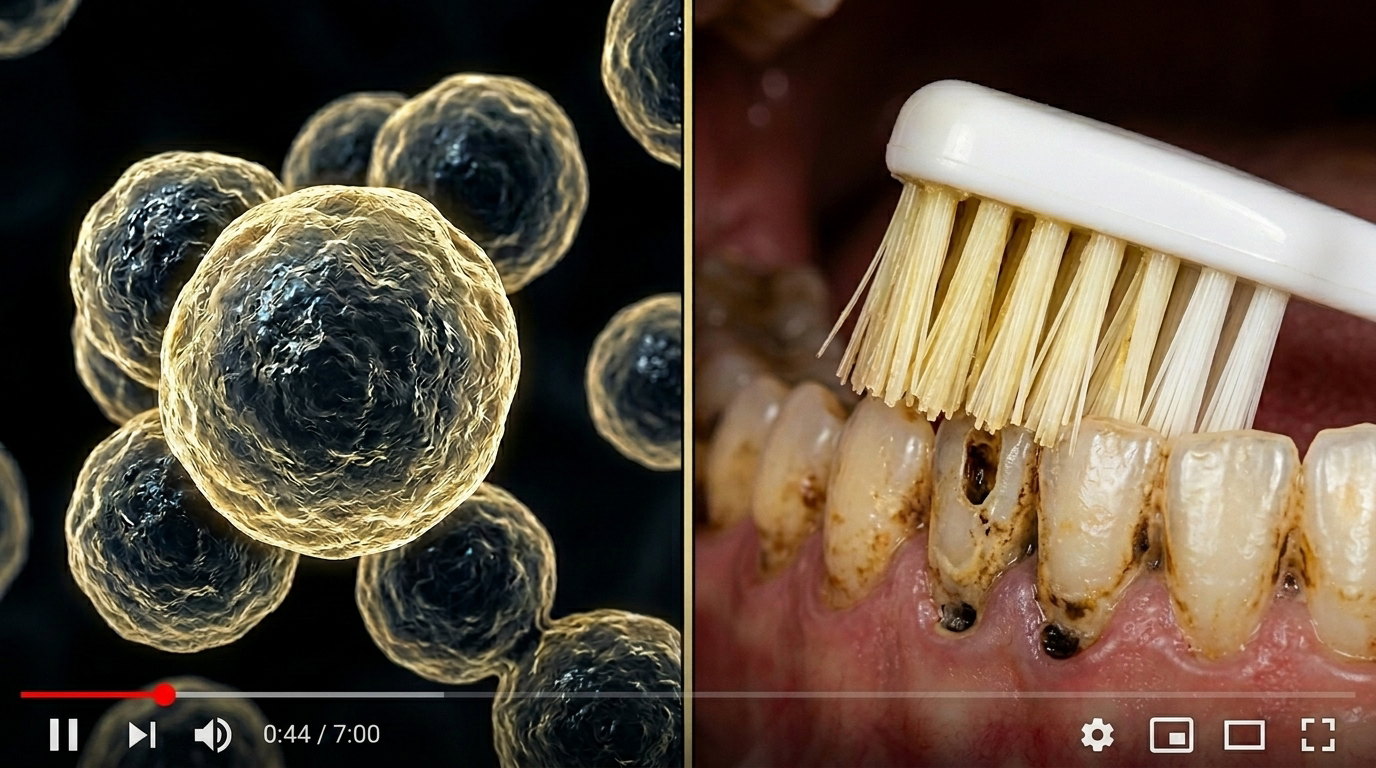
When this enzyme is absent, destructive bacteria build an acid-proof fortress directly at the gumline. Your toothbrush can't reach them. Your mouthwash can't kill them. Your antibiotics suppress them for two weeks — then they come roaring back stronger than before, burrowing deeper below the gumline each time.
Without the enzyme: bacteria attack the connective tissue anchoring your gums to your teeth. The gums pull back to escape the infection. The bone underneath begins to deteriorate. Your dentist calls it recession — but what's really happening is an uncontrolled bacterial siege that no standard treatment is designed to stop at the source.
And here's what Hartwell couldn't shake: gum graft surgery moves tissue to cover the recession. It doesn't eliminate the bacteria causing it. Without restoring the enzyme, the recession continues — and the graft fails over time. That's the gap no periodontist will tell you about. That's why nothing has worked long-term.
But here's what took Hartwell by complete surprise.
While digging through military research archives, he came across a series of studies on Scandinavian naval personnel. Sailors in their 70s and 80s — with almost no access to modern dental care — showed virtually no gum recession, no bone loss, and no gum pocket deepening compared to their American counterparts of the exact same age.
The reason traced back to a simple morning ritual their ancestors had practiced since the Viking era — a specific combination of fermented compounds that their bodies converted into the precise enzyme modern American mouths are missing.
Researchers studying the data called it "nature's cavity killer." When it's present in sufficient quantities, destructive bacteria simply cannot build their fortress at the gumline. The bacterial siege stops. The connective tissue stabilizes. The gums stop receding. In early-stage cases, the tissue begins to recover on its own.
When it's absent — which it is in nearly 9 out of 10 American adults — the bacteria win. The recession advances. And eventually, a periodontist hands you a $8,000 surgical estimate.

Here's what surprises most people: the Viking morning ritual isn't made from anything rare or expensive. The compounds involved are already sitting in most American kitchens — or available at any grocery store for a few dollars. The secret isn't the ingredients themselves. It's the specific way they're combined to reactivate the enzyme your mouth stopped producing.
Hartwell has put together a free short video that walks you through exactly what this enzyme is, why your mouth stopped making it, and how to restart the process using the same Viking-era method — adapted for a modern morning routine that takes less than 30 seconds.
He doesn't hold back. He names the enzyme. He shows the research. He explains why the $124 billion American dental industry — and the periodontists charging thousands for graft surgery — have absolutely no financial incentive to tell you any of this.
If your gums have been receding despite everything you've tried, and you're facing a surgical estimate you can't afford or don't want to risk, this short video may be the most important thing you watch before making that decision.